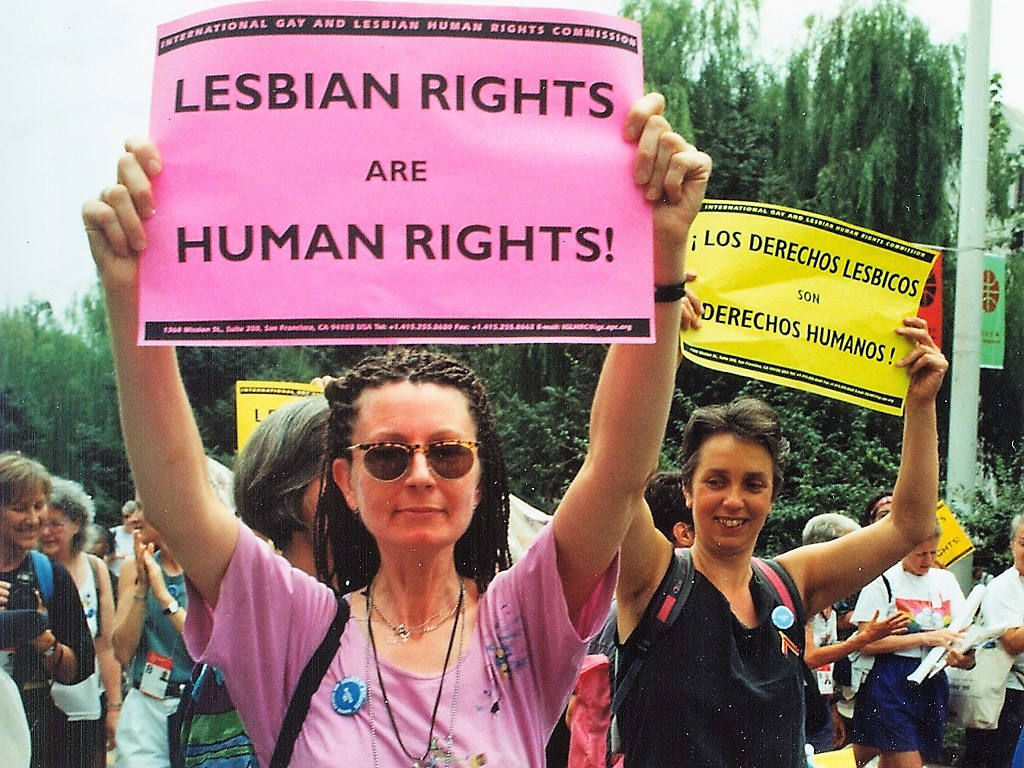
LBORI (Lesbian Bill of Rights International)
Below is a statement from the LBORI to which CoAL is a signatory.
“The silencing of women has a long and brutal history. In earlier centuries, women could be tortured for speaking out, which was seen as “nagging.” Almost unbelievably, the Scold’s Bridle, a painful metal mask intended to enforce female silence, remained on the British penal books until 1967. It controlled women perceived as publicly challenging male authority or social norms. Though laws today apply to everyone, they impact women especially hard, rendering us silent, compliant, and invisible.
Over the last decade or two, Western democracies have shifted from open societies that tolerate disagreement to managed societies that criminalise it. Laws sold as preventing “harm” or “hate” now punish lawful expression, especially when it challenges ideological fashion.
United Kingdom
The UK leads the Western world in online prosecutions, with thousands of arrests annually under the Malicious Communications Act and Communications Act 2003, often for social media posts. Many result in convictions or cautions for speech alone, something almost unimaginable a generation ago.
- Kathleen Stock
The Office for Students fined Sussex University £585,000 for failing to uphold free speech protections after harassment campaigns targeted philosopher Kathleen Stock for stating that sex is real. (Office for Students, 2025)
- Lucy Connolly
Connolly was sentenced to 31 months in prison for an offensive post about asylum seekers. Although her remarks were ugly, they did not result in immediate violence; the case demonstrates how speech alone – even a deleted tweet – can now lead to lengthy prison terms. (ITV News, 2024)
Australia
This Australian women’s advocate and founder of Binary Australia was repeatedly investigated under vilification laws for referring to males as “men.” Her experience shows how even mild factual statements can trigger legal scrutiny in jurisdictions with broad anti-discrimination codes.
New Zealand
This is a women’s rights campaigner charged under the Harmful Digital Communications Act after refusing to remove social media posts critical of a “trans rights” activist. Her digital devices were seized, and she faces ongoing proceedings. (Feminist Legal, 2025)
Brazil
Cêpa was charged with “social racism” (a criminal category now interpreted to include “transphobia”) for misgendering a politician. Facing up to 25 years in prison, she fled Brazil and was granted asylum in Europe. (The Australian, 2025)
Germany and USA
The interaction of “gender identity” with existing free-speech principles is developing rapidly in Germany and in the United States as well as in the countries we previously discussed. As an addendum to our earlier article on freedom-of-speech concerns with respect to dissenting views on “gender identity,” the following examples from Germany and the United States show how this conflict is currently playing out.
Two German examples illustrate how speech suppression has been enforced:
- The disclosure ban in the Self-Determination Act (SBGG) prohibits revealing a person’s sex at birth or former legal name without consent. Violations are treated as administrative offences and can be punished with fines of up to €10,000.
- The parents’ brochure Wegweiser aus dem Transgenderkult (“Guide Out of the Transgender Cult”), published by Rona Duwe, was placed on the federal index of media harmful to minors. As a result, it may no longer be publicly advertised.
In the United States, where there is a Constitutional right to free speech, a group of parents were banned from school property by school officials in New Hampshire for wearing “XX” armbands to a girls’ school soccer game to protest boys playing on girls’ teams. The parents’ lawsuit is currently awaiting a ruling by the federal Court of Appeals for the First Circuit (Fellers v. Kelly).
This essay explores how such laws impact women, including lesbians, who speak out – particularly about the harms of “gender identity” ideology. Their experience reveals that when governments decide which words can be spoken, democracy begins to erode.
Many of these laws are similar across multiple countries. Speech restrictions are framed as “harm prevention” and target anything “grossly offensive”, causing “emotional distress” or even just “causing annoyance”. But “harm” is subjective. The person most determined to be offended gains a kind of veto power over another’s free speech. Some complainants who have posted indecencies themselves claim moral outrage when women state biological facts, and courts often side with them.
In the UK, Australia, and New Zealand, activists and institutions use these frameworks to suppress dissent on such topics as observable sex and gender identity ideology. Women and lesbians who were once vocal defenders of our rights are often silenced.
This trend is part of a new authoritarianism, clothed in the language of popular psychotherapy. Governments claiming to shield citizens from emotional discomfort treat us like children, while grievance-driven litigation erodes fundamental rights.
When people see women arrested or losing their jobs for tweets, or activists dragged into court for stating facts, they fall silent. There is a “chilling effect” in free speech. Self-censorship spreads. Writers, podcasters, parents, and teachers check every word and avoid topics that could invite complaints or police visits. Public debate withers; what remains is conformity and politeness born of the fear of legal proceedings, harassment complaints, or employment sanctions. Lesbians who assert that same-sex attraction means female-only are accused of “hate” and “bigotry.” Speech must be both inoffensive and ideologically aligned, stifling democracy, innovation, and societal development.
The push to curb free speech also reveals an uncomfortable similarity between the progressive left, which seeks to erase biological sex, and the ultra-conservative right, who push women back into domestic roles. Both aim to remove women from public life.
For lesbians, whose very definition depends on recognition that sex is real, this convergence is especially dangerous. To live freely, we must speak freely. When we cannot say “women are female” or “a man is a male” without legal risk, we are no longer equal citizens. Free speech is not an abstraction.
Internationally, prosecutions are not driven by a single kind of law. Whether called Harmful Digital Communications Act, Online Safety Bill, or hate speech provisions, the logic is the same: Regulate speech to protect people from claimed emotional harm. Mechanisms differ, but the outcome is always the same – silencing those whose ideas offend current political fashion.
In stark contrast to Western silencing, repression in Iran and Afghanistan, for instance, is overt and lethal. In Iran, women advocating for basic rights face arrest, flogging, and execution. In Afghanistan, the Taliban has erased women’s voices from public life. Yet women in both countries continue to resist. Women in the West must resist laws that curtail free speech to show that liberty is both necessary and possible for all women.
Laws that punish women and lesbians for naming reality protect delusions and lies, not people. When delusions become enforceable, truth and democracy narrow. But resistance is growing. Across the UK, Australia, the US, and beyond, women, including lesbians, are pushing back – in courts, in public squares, and online. Every placard, article, submission, book, or post refusing intimidation is an act of resistance and courage. Freedom of speech is not a luxury. Women everywhere need to speak the truth as much as they need to breathe. In doing so, they defend not only their rights, but everyone’s right to think, question, and speak freely.
Lesbian Bill Of Rights International
WDI USA Lesbian Caucus
LAZ reloaded (Germany)
Lesbian Resistance New Zealand
Lesbian Action Group (Australia)
Lezbicon (Norway)
Arcilesbica (Italy)
CoAL (Australia)
UK Supreme Court confirms that the UK Equality Act has always defined woman and sex as biological
CoAL supports the following LBORI Statement about why the UK Supreme Court ruling in For Women Scotland Lt v The Scottish Ministers has implications for lesbians globally:
“On April 16, 2025 the Supreme Court of the United Kingdom handed down a landmark ruling, to decide whether men having a “gender recognition certificate” (GRC) are women for purposes of the UK’s Equality Act of 2010. In effect, the Court was asked to define “woman” and “sex” for purposes of the Equality Act. The Equality Act protects a number of categories of people on the basis of historic oppression, including age, race, sex, “gender reassignment,” disability, religion or belief, sexual orientation, marriage or civil partnership, and pregnancy or maternity.
The ruling was anxiously awaited by lesbians everywhere, not just in the UK. The stakes were high for all women, but especially for lesbians: Would lesbians be allowed to gather publicly – as lesbians, excluding all men – for social purposes and for political campaign purposes? Where public boards designate a certain number of seats for women, or for lesbians, would a man having a GRC qualify?
When the ruling was made, it was greeted by lesbians worldwide with relief and joy. In short, the Court ruled that the Equality Act has always defined woman and sex as biological, and not to be conflated with “certificated” sex. It thereby excludes all men from the category of woman and of lesbian. The Court defined lesbian as “a female who is sexually oriented towards (or attracted to) females.” That is, men cannot be lesbians and have no right to enter lesbian spaces, with or without a GRC. It was spectacularly good news for UK lesbians, who have experienced discrimination in public places such as pubs for being perceived as “TERFs,” that is, for excluding males from their public gatherings. That discrimination would now be unlawful.
UK lesbians deserve particular credit for their work that led to this major legal victory, including the groups Scottish Lesbians and Lesbian Persistence.
The Court did state that under the Equality Act “transgender” people will continue to be protected from discrimination – without defining “transgender people” – based on either their status as “trans” or someone’s perception of them as female; so obviously there is still some political campaigning that needs to be done in this area in the UK. There is good reason for courts to avoid defining “transgender people,” because even those who call themselves “transgender” are unable or unwilling to produce a coherent definition. Nevertheless, this was a significant win for women and girls, including lesbians.
What specifically might this UK ruling mean for lesbians in other countries? For one thing, it seems to advance a trend of rolling back so-called “transgender rights” that had already been underway in a number of countries. In this article we will take a look at the countries represented by LBORI member organizations, describing the current state of the law regarding lesbians vis a vis “gender identity,” and how and whether the FWS ruling might influence lesbian rights outside of the UK.
The current US President has issued an Executive Order stating that only two immutable sexes are to be recognized, male and female. Federal agencies have generally complied, for instance by removing preferred pronouns from employees’ online profiles; and passports are no longer being issued with inaccurate sex markers. The execution of some of Trump’s EOs has been blocked by court injunctions; for example, there are still men housed in women’s prisons, pending judicial outcomes, and there are still men claiming to be women in the US military.
At the state level there is sharp division regarding recognition of “transgender people,” depending on whether the state has a Republican (“red”) or Democratic (“blue”) majority. Red states typically have legislation providing for single-sex prisons, shelters, sports, and/or public toilets. Blue states typically protect “trans status,” and are preparing to clash with federal policy in court. But red states also tend to disenfranchise lesbians as part of “LGBTQ+,” for example, by banning or attempting to prohibit teachers from discussing same-sex relationships with their young students, along with all things “trans” and “queer.” It all needs judicial resolution at the federal level.
The lawfulness of so-called “gender affirming care” for minors (more accurately called the use of medical procedures to disguise children’s sex characteristics) is the central subject of an important lawsuit pending before the US Supreme Court, United States v. Skrmetti. In this case, the state of Tennessee had banned the procedures on children, and several parties sued to have the ban removed, including some parents, the Biden administration, and the American Civil Liberties Union (ACLU). The US chapter of Women’s Declaration International filed an amicus curiae brief in that case; Women’s Liberation Front (WoLF) also filed an amicus brief. The ruling is expected in June, 2025.
The Skrmetti case raises issues far broader than just the administration of cross-sex hormones and surgical sterilization of minors. Additional issues include whether there can be male “women,” whether “transgender” describes a class that is sufficiently coherent to be protected under the US Constitution, and whether transgender ideology harms lesbians, gay men, and bisexuals; a ruling that answers these questions may benefit lesbians. The judiciary is not supposed to be influenced by global trends; but the FWS ruling, coming from the highest court in a country whose common-law legal system we share, could possibly provide cover for the US Supreme Court justices if they want to rule similarly.
In Germany, the Self-Determination Act (“SBGG”) has been in force since November 1st, 2024. Under this law, adults may change their sex entry once a year between female, male, diverse, and no entry.
No medical-psychological assessments or operations are required for this. A self-declaration at the registry office is sufficient.
Children from the age of 14 may also ask for a change of sex entry according to their “gender identity” with the consent of their parents, or, alternatively, a court. Highly controversial guidelines on medical procedures have been drawn up by medical associations and allow puberty blockers and medical interventions from the age of 14.
On February 23rd, Christian Democrats and Social Democrats were elected by a majority of voters. They are currently negotiating a coalition government. Before the election, the Conservatives had promised to abolish the law, but the Social Democrats rejected this, meaning that the law will be evaluated until 2026.
German feminists are actually rallying once again to fight the law and are hoping that the changes in the UK and the USA will help them to do so successfully.
The UK ruling is in stark contrast to the situation of lesbians in New Zealand, where the law currently permits self-identification, i.e., male inclusion in the legal category of “woman.” NZ’s Human Rights Act and Births, Deaths, Marriages and Relationships Registration Act allows for legal changes of sex markers without any requirement for medical transition.
In contrast to the UK’s ruling, which reaffirms that “woman” and “lesbian” are categories rooted in biological sex, NZ law conflates sex with self-declared “gender identity.” This has left many lesbians legally vulnerable and socially marginalised.
Lesbians are working to restore our sex-based rights and protections, but have not yet challenged the status quo in a court of law in New Zealand. However, following unsuccessful mediation attempts facilitated by the Human Rights Commission, one lesbian group, Lesbian Action for Visibility in Aotearoa (LAVA) escalated the matter to the Human Rights Review Tribunal. The Tribunal’s decision in this case could have significant implications for the balance between freedom of expression and anti-discrimination protections within New Zealand’s legal framework. In 2021, Wellington Pride had declined LAVA’s application to host a stall at an event because the organisers perceived LAVA’s views as “anti-transgender.” LAVA contends that this exclusion constitutes unlawful discrimination based on their ethical beliefs, political opinions, and sexual orientation. The case will be heard later this year.
There is also a new bill in the pipeline: Introduced by the New Zealand First party, the Fair Access to Bathrooms Bill seeks to mandate the provision of clearly marked unisex and single-sex bathrooms in all new public buildings. The bill aims to restore the privacy and safety of women and girls. The public discussion around this bill will certainly be informed by the UK’s Supreme Court ruling.
Should a legal challenge against the erasure of lesbians and for the re-establishment of sex-based protections arise, the UK findings will surely be useful to lawyers, activists, and legislators in NZ. Although NZ courts are fully independent, decisions from the UK Supreme Court can be cited as precedents. Hopefully, NZ judges will look to the UK ruling to help interpret terms like “sex” or “discrimination” under NZ’s Human Rights Act 1993, even though they’re not bound to follow it.
The finding of the UK Supreme Court that Man and Woman refer to biological sex will not explicitly apply in Australian Law. The finding on the other hand could be very influential in that it will supply an argument that can be used without associating women’s rights with bigotry, extreme right wing organisations, Nazis, or Donald Trump.
Currently most of Australia has “self-ID” laws where a man can claim to become a woman just by claiming female identity.
For example, there is a football team in New South Wales that won its division with five players who, in the terms of international athletic standards, had gone through male puberty. The young women who objected to the unfairness were the ones sanctioned.
Legal cases on the meaning of “woman” currently in appeal to the Federal Court
1. The Lesbian Action Group applied to the Australian Human Rights Commission for an exemption to run public events for lesbians, i.e., women with the sexual orientation of being attracted to persons of the same sex.
– The exemption request was based on the clauses in the Sexual Discrimination Act referring to Special measures intended to achieve substantive equality between men and women, or people who have different sexual orientations.
– The exemption was refused by the Australian Human Rights Commission.
– On appeal to the Administrative Review Tribunal, the finding was that anyone can be excluded from public events for Lesbians, except a man who identifies as a woman who is sexually attracted to women.
– The Appeal to the Federal Court will be heard February 2026.
2. “Tickle vs Giggle for Girls”, where the judge found that a man who identifies as a woman was indirectly discriminated against by being excluded from a social media platform established to provide support for women. Significant in the judgement was the statement that “on its ordinary meaning, sex is changeable.” This Appeal will be heard in August 2025.
The finding of the UK Supreme Court could be very useful as a protection from and defence against criminal charges of “Hate Speech.” An Australian Court would have to find that a paraphrasing of the finding of the UK Supreme Court was “hateful.” “Hate Speech” laws recently passed in Victoria define hate speech in terms of Gender Identity as anything that a “reasonable transgender person” finds hateful. There is no defence that a statement can be proven true.Transgender activists claim that “misgendering” and “deadnaming” are hateful.
Self-ID laws allow the alteration of a Birth Certificate to change the birth sex recorded. Thus the social experience of birth as a boy baby, growing up as a boy child, the acquisition of qualifications and work experience under a male name, the fathering of children, marriage as a man are all declared as never having happened. There is an obvious legal minefield in the area of a person claiming that he or she has been “deadnamed” when asked to fulfill obligations undertaken in the persona of the male person that never existed. The finding of the UK Supreme Court that sex means biological sex may give the confidence to people harmed by the gender transition of an intimate or business associate to bring legal action
There are no cases pending in Norway that impact the protection of lesbians vis a vis people claiming “trans” status. In light of the UK ruling, Lezbicon is consulting with lawyers with an eye toward putting together a lawsuit having a lesbian-rights issue.
In Italy there is a law regulating “gender transition” that involves Court approval based on psychological and medical reports, but does not require surgical intervention. Although a national self-ID bill is not in the offing, there is a strong push to promote self-ID at a local level and within schools, universities, and professional associations. The ongoing battle in Italy at the moment is more cultural than legal. However, the UK ruling is certainly going to help. It should serve as a warning of the legal incoherence that an obscure notion such as “gender identity” can bring into the Italian legal system.
WDI USA Lesbian Caucus
LAZ reloaded (Germany)
Lesbian Resistance New Zealand
Lesbian Action Group (Australia)
Lezbicon (Norway)
Arcilesbica (Italy)”
Lesbian rights to protection from male violence.
Below is a copy of an LBORI Report: How UN Women Want to Reframe Male Violence Against Women and Certain Men (received 9 Septembe 2025). This report describes the further political shenanigans of gender activists at UN level aimed at using dishonest language and data to remove women’s and lesbian rights to protection from male violence.
“The United Nations group called United Nations Entity for Gender Equality and the Empowerment of Women (UN Women) held a webinar September 3, 2025 titled “Measuring gender-based violence: Data collection and evidence on violence based on sexual orientation, gender identity, gender expression, and sex characteristics (SOGIESC).” I was able to attend live and remotely as coordinator of Lesbian Bill Of Rights International (LBORI).
The webinar organizers – Raphaëlle Rafin, Sophie West-Browne, and Giorgia Airoldi – used the occasion to introduce their report having the same title as the webinar. I can assure any readers who do not support gender identity ideology that the chat was by far the most interesting aspect of the webinar; or perhaps I am influenced in saying that because I persistently asked what I considered pertinent questions in the chat, sparking discussion.
The gist of my persistent questioning during the live chat was “This webinar purports to be about ways to perform accurate, meaningful, and useful data collection. But how can those aims be accomplished where there is no coherent definition of ‘lesbian’ or of sexual orientation, and no discussion of how both conflict with ‘gender identity’ and ‘gender expression’?”
I received a couple of rude or dismissive responses to my question at first; so I reframed and rephrased it several times in the chat. Eventually, several attendees said something like “I wondered that too.” And eventually I received as much of an answer as I could reasonably have expected from supporters of UN Women, to the effect that ‘lesbian’ doesn’t need definition because
- such terms as those included in the ‘LGB’ acronym, for instance, are too “culturally specific” to be universally applicable to the work of the United Nations; and
- violence can be based on self ID or on perceived identity (for example, someone thinks you look like a lesbian).
So, it was explained to me, it is for these reasons that the report focuses on sexual orientation, gender identity, gender expression, and sex characteristics – and not on whether victims of violence actually *are* lesbian, for instance. Because actually *being* lesbian is somehow beside the point. Conveniently, if this is accepted, then whether any person can actually *be* “trans” is also logically beside the point!
It was further explained to me that understanding the scope of the issue (which issue?) and the common roots of the violence are what matters most. But which demographic perpetrates the overwhelming percentage of the violence universally? Of course it is men and boys, and acknowledging that bit of data is forbidden in this patriarchal ideology; the erasure of sex in favor of “sex characteristics” aims at ignoring the obvious, universal link between maleness and violence against women, lesbians, and those people perceived to be like either group.
I’m puzzled by the notion that ‘lesbian’ is culturally specific. LBORI’s Lesbian Bill Of Rights defines a lesbian as “a human female homosexual; or, a woman or girl who is exclusively same-sex attracted.” The purported cultural specificity of that definition eludes me. But I suspect the criticism is in alignment with a transgenderist/postmodernist agenda:
- It’s useful to avoid defining any terms at all where the intent is to conflate terms (such as ‘sex’ and ‘gender’) in some usages, but distinguish them in others.
- It’s useful when the intent is to erase sex to avoid either defining or using any term that tends to focus the reader’s attention on sex.
Going forward, it seems predictable that the proponents of gender identity ideology, including UN Women, will increase their usage of the SOCIESC acronym instead of LGBTQIA+ as a next step in their campaign to erase all women (including lesbians in particular) and to erase men and boys as the main perpetrators of violence universally.
Lauren Levey, coordinator
Lesbian Bill Of Rights International”
Lorem ipsum dolor sit amet, consectetur adipiscing elit. Ut elit tellus, luctus nec ullamcorper mattis, pulvinar dapibus leo.